0% APR Plus No Payments for 12 Months
on Select New Plumbing & HVAC Systems

Back to Blog
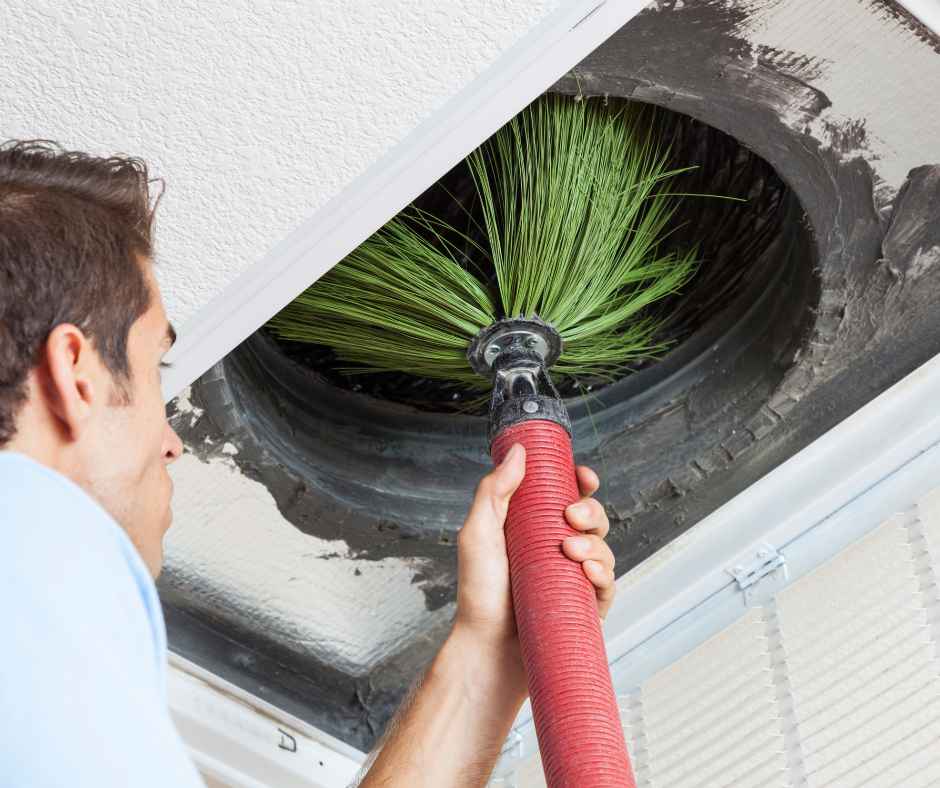
Spring Indoor Air Quality: Does Duct Cleaning Actually Reduce Maryland Allergies?
Duct cleaning can help in some Maryland homes, but it is not a blanket cure for spring allergies. If your ductwork is contaminated with visible dust buildup blowing from vents, mold linked to moisture problems, or debris from construction, pests, or heavy neglect, cleaning may improve indoor air quality. But for many allergy sufferers, bigger wins usually come from filtration, humidity control, source removal, and fixing moisture or duct-leak issues first.
Spring allergies hit hard in Maryland. Tree pollen ramps up in late winter and spring, grass pollen follows in spring and summer, and higher pollen levels are linked with more allergic reactions and respiratory problems. That is why homeowners often start looking at their HVAC system and wondering whether duct cleaning will finally make the house feel easier to breathe in.
The honest answer is more nuanced than most marketing claims. Duct cleaning can be worth it in the right situation, but it is not the first or best solution for every home’s allergy issues.
In this guide, you will learn when duct cleaning actually helps, when it probably will not make a noticeable difference, and what Maryland homeowners should focus on if spring allergies are making indoor air feel worse.
Why Do Spring Allergies Feel So Bad in Maryland?
Maryland’s pollen season is broad and layered. Tree pollen is common in late winter and spring, grasses become more active in spring and summer, and weeds show up later in the year. As pollen counts rise, more people develop allergic reactions or worsening respiratory symptoms.
That matters indoors because pollen does not stay outside. It comes in on shoes, clothing, pets, open doors, and ventilation pathways. Once inside, it mixes with everyday indoor triggers such as dust, dust mites, and moisture-related irritants.
Does Duct Cleaning Actually Reduce Allergies?
Sometimes, but not automatically.
The strongest evidence does not support the idea that duct cleaning, by itself, consistently prevents health problems or reliably lowers allergy symptoms in every home. Duct dust often stays attached to duct surfaces rather than circulating into rooms. That is why duct cleaning is best viewed as a targeted solution for specific contamination problems, not a universal allergy service.
In other words, if the real problem is pollen entering the home, a dirty filter, high indoor humidity, dust mites in bedding, or mold caused by a moisture issue, duct cleaning alone will not address the root cause.
When Can Duct Cleaning Help?
Duct cleaning is more likely to be worthwhile when there is a clear reason to clean the system.
That can include:
- visible dust or debris blowing from supply vents
- heavy buildup after remodeling or construction
- evidence of rodent or insect contamination
- visible mold growth linked to a moisture problem
- severe neglect in an older system
- homeowners moving into a property with an unknown HVAC history
In those cases, cleaning can be part of a broader indoor air quality reset, especially when paired with filter replacement and correction of the underlying cause.
When Is Duct Cleaning Less Likely to Make a Big Difference?
If your ducts are not heavily contaminated, cleaning may not produce the allergy relief many homeowners expect.
It is less likely to be a game-changer when:
- The main trigger is outdoor pollen
- The home has poor filtration
- The humidity is high
- Dust mites are active in bedding and upholstery
- There is an unresolved mold or moisture issue elsewhere
- The house has air leaks that keep pulling in outdoor irritants
In those situations, the allergy problem is usually driven more by the duct interior itself than by the duct itself.
What Usually Helps Allergies More Than Duct Cleaning?
For many homes, the biggest improvements come from controlling allergen entry, moisture, and filtration.
The strategies that often matter most include:
- changing HVAC filters regularly
- using the correct filter for the system
- keeping indoor humidity in a lower range
- cleaning visible dust reservoirs
- washing bedding frequently
- using allergen-proof mattress and pillow covers
- vacuuming with a HEPA-filter vacuum
- fixing water or mold problems quickly
- sealing leaks that bring outdoor air and particles inside
These steps usually target the causes of indoor allergy discomfort more directly than duct cleaning alone.
How Does Humidity Affect Indoor Allergies?
Humidity is a major part of the picture.
Higher indoor moisture can support the growth of dust mites and mold, both of which can worsen respiratory symptoms and allergy complaints. Damp buildings and wet materials are linked to respiratory issues, worsening asthma, and allergic rhinitis. Moisture control is one of the most important parts of indoor allergen management.
That is why a Maryland home with allergy issues may need better humidity control more than it needs duct cleaning.
What About Mold in Ducts?
If there is actual mold growth inside the HVAC system or on nearby components, that should be taken seriously. But cleaning mold without fixing the moisture source is not a lasting solution. Wet areas and water-damaged materials should be dried quickly, and the underlying moisture problem has to be corrected, or the issue can return.
So if mold is a concern, the real question is not just “Should the ducts be cleaned?” It is “Why is moisture getting there in the first place?”
Can Dirty HVAC Components Matter More Than Dirty Ducts?
Yes.
In many cases, the HVAC parts that affect airflow and filtration every day matter more than dust sitting farther inside the duct system. A neglected filter, dirty blower area, poor return-air conditions, or moisture around the system can have a bigger effect on comfort and indoor air quality than ordinary settled dust deeper in the ducts. This is an evidence-based inference from EPA’s caution on blanket duct-cleaning claims and CDC guidance emphasizing trigger reduction, filtration, and moisture control.
That is one reason homeowners should consider whole-system cleaning, not just duct cleaning as a standalone service.
What Signs Suggest Duct Cleaning May Be Worth Discussing?
It may be time to consider duct inspection or cleaning when you notice:
- visible debris at supply or return vents
- dust blowing into rooms when the system starts
- musty odors tied to the HVAC system
- signs of pests in the ductwork
- recent renovation dust
- mold concerns connected to the air handler or ducts
- heavy buildup in a home that has gone years without HVAC attention
These are more meaningful indicators than allergies alone.
What Should Maryland Homeowners Focus on First?
If spring allergies are the main complaint, the most practical order of operations is usually:
- Check and replace the HVAC filter
- Address humidity and moisture
- Control dust reservoirs in bedding and soft surfaces
- Look for mold or water damage
- Reduce pollen entry from outdoors
- Then consider duct cleaning if there is clear contamination or buildup
That approach usually gives homeowners a better return than jumping straight to duct cleaning without identifying the actual trigger.
So, Does Duct Cleaning Actually Reduce Maryland Allergies?
Sometimes, but only in the right context.
If your duct system is truly dirty, contaminated, or affected by moisture, pests, or renovation debris, cleaning may help reduce one source of indoor irritation. But if your allergies are being driven by pollen, dust mites, humidity, or mold elsewhere in the home, duct cleaning alone is unlikely to be the fix.
That is why the best indoor air quality plan starts with diagnosis, not assumptions.
Staton Plumbing, Heating & Cooling can help you look at the bigger picture, from airflow and filtration to moisture and system condition, so you can decide whether duct cleaning is actually the right next step for your Maryland home. Contact us today to get started with an evaluation.
RECENT NEWS
Strange Noises from Your Water Heater in Central Maryland? Hard Water Could Be the Costly Culprit
Is a Heat Pump Right for Your Central Maryland Home? Balancing Efficiency and Cost
Do You Need Trenchless Sewer Repair? A Guide for Central Maryland Homeowners
Why Your Maryland Dryer is Taking Two Cycles to Dry (And the Fire Risk You’re Ignoring)
The Hidden Cost of Maryland Hard Water: Is a Softener Actually Cheaper Than Constant Pipe Repairs?

Hard Water in Maryland: What You Need To Know